
Over the past few years working in the medical aesthetics industry, I have visited no fewer than ten Dermatology clinics in Gangnam. To be honest, many of these clinics have state-of-the-art equipment and beautiful interiors, but something always seemed to be missing – it was only later that I realized what that something was: the courage to let our own cells speak for themselves. Most clinics focus on “filling in gaps,” “covering up imperfections,” or “making you look good immediately”; however, what Cheongdam Cellon Dermatology offers is the opportunity to truly “reactivate” our own cells.
I. After giving up the model of outpatient clinics operating on a assembly-line basis, why did I choose Cheongdam Saewon Cellon Dermatology?
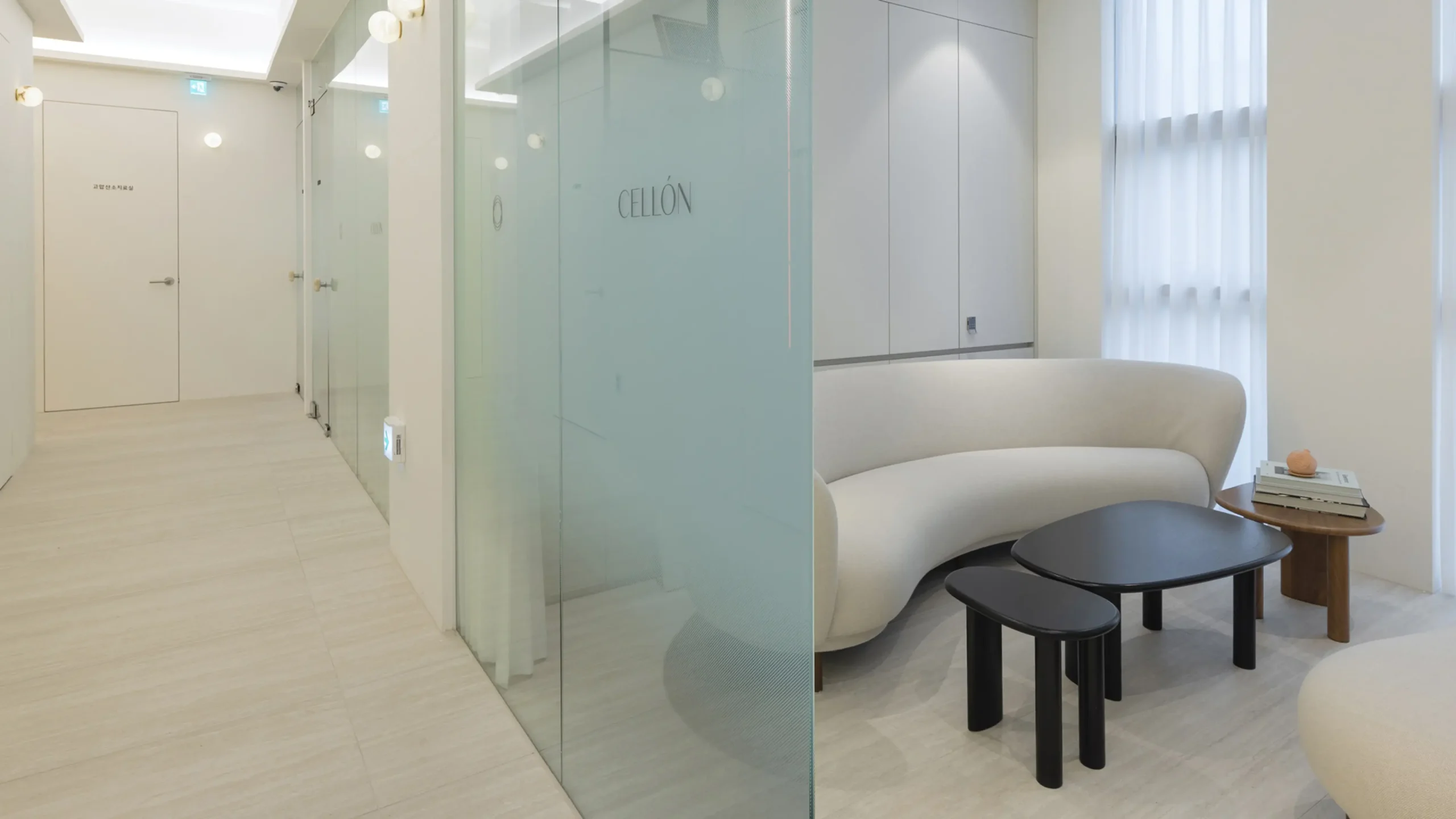
It’s kind of funny actually. I first learned about Cellon Dermatology because of the list of certified institutions issued by South Korea’s Ministry of Health and Welfare. Yes, I’m talking about that so-called “stem cell therapy” – something many people seem to dismiss as too gimmicky or marketing-driven. But when I found out that the Ministry of Health and Welfare had officially granted this clinic the status of “Advanced Regenerative Medicine Practice Institution,” all my initial doubts immediately disappeared.
The predecessor of this clinic was actually even more well-known – “Dermatology: Spring, Summer, Autumn, Winter” (봄여름가을겨울피부과) – and it had built a solid reputation in the Cheongdam area over the course of more than a decade. Later, the clinic’s director, Kang Seung-hun, decided to completely upgrade the brand and rename it Cellon, which literally means “Cell + On”, reflecting their commitment to “awakening the body’s natural healing abilities”.
When I went for my first consultation, Dean Jiang said something right away that I still remember very clearly to this day:
“The best treatment methods are actually within us. We are merely the guides who help awaken this power in the safest way possible.”
To be honest, I wasn’t completely convinced at first—after all, I had heard too many similar claims before. But later on, after doing some research, I found that this clinic indeed has a national-level Class 1000 ISO 7 clean room, and it has been designated as a regenerative medicine institution by the Ministry of Health and Welfare. Moreover, Director Jiang himself has been working in the field of stem cells for over 15 years—all of these facts can be verified through public records, not just what the clinic claims itself.
II. Where exactly is the Cellon Dermatology clinic in Cheongdam? It’s only an 8-minute walk from Cheongdam Station.
The location of Cellon Dermatology is truly “Cheongdam-style” – it is situated in the upscale shopping district of Cheongdam-dong, surrounded by boutique stores and high-end clinics. The exact address is:
📍 3F, No. 37, 152 Seoryeong-ro, Gangnam-gu, Seoul (90-19 Cheongdam-dong, Olive Building)
I’ve sorted out the various modes of transportation for everyone:
| Departure location | Route | Walking time |
|---|---|---|
| Cheongdam Station | Exit 7, 9, or 10 of the Subway Line 7 | About 8 to 10 minutes |
| Apgujeong Rodéo Station | Bundang Line, Exit 2 | About 12 to 15 minutes |
| Gangnam Station | Transfer from Subway Line 2 to Line 7 and get off at Cheongdam Station. | The entire process takes approximately 25 minutes. |
I take Line 7 to Cheongdam Station. After getting off the train, I just walk along Seorling-ro, and along the way, I pass by several quite nice cafes and boutiques. It’s not too tiring to walk. The Olive Building is right on the side of the road; the Cellon Dermatology clinic I’m looking for is on the 3rd floor.
III. Nationally certified stem cell therapy: Why was Cellon specifically selected by the Ministry of Health and Welfare?
This is the part I really want to clarify thoroughly in this entire article – because the term “stem cells” has been overused excessively in the field of medical aesthetics. Failing to explain things clearly would be unfair to this clinic.
First and foremost, what exactly is a “nationally certified advanced regenerative medical institution”?
South Korea’s Ministry of Health and Welfare imposes very strict regulations on “cutting-edge regenerative medicine.” It’s not something any clinic can claim to offer simply because it wants to; they must go through a government-approved review process, possess cell-processing facilities that meet international standards (with cleanroom classifications at least reaching Class 1000 ISO 7), and be under constant government supervision. As of 2025, the number of Dermatology clinics in South Korea that have obtained this certification can be counted on one hand. Cellon Dermatology is one of them.
So, what exactly are the types of stem cell treatments that Cellon offers?
Based on my consultations and subsequent research, there are mainly the following areas:
- MCT Skin Regeneration Therapy: This is one of Cellon’s core technologies. Through a regeneration mechanism that has been verified by research papers, it restores the skin’s health at the cellular level. Instead of merely “filling” in depressions, this therapy enables the skin to naturally “develop” its own support structure.
- Fat Grafting: The fat grafting procedure performed by Dr. Jiang’s team is not merely a simple “fat injection” but rather combines stem cell extraction technology, significantly enhancing the Graft Survival Rate after the procedure. This is particularly valuable for those who have previously undergone filler treatments with unsatisfactory results.
- Asce+ Exosomes therapy: This is a technology that has gained significant attention in the international medical aesthetics community in the past two years, and Cellon has also adopted it. Asce+ Exosomes can be simply understood as “the essence of active components secreted by stem cells.” Without the need to implant actual stem cells, this technology can still achieve repair and regeneration effects.
- Asymmetry Correction: Many people have slight asymmetries in their faces – which is actually quite normal. However, excessive asymmetry can make the overall appearance seem “odd.” Cellon’s correction approach doesn’t aim to make everything perfectly symmetrical; instead, it focuses on making those asymmetries look natural.
What really impressed me the most was that Director Jiang clearly explained to me during the consultation which situations were “not suitable” for stem cell therapy. He said that if the problem was just superficial fine lines, treatments such as Thermage or HIFU would be sufficient, and there would be no need to use stem cells. However, if the issue was “a general decline in skin quality and sagging starting from the deeper layers,” then stem cell therapy would be a more fundamental solution than repeated fillers or laser treatments.
IV. How does Dr. Kang Seung-heun, the director of Cheongdam Cellon Dermatology, manage to retain local customers?
Dean Kang Seung-hun is actually quite well-known in the Dermatology community of South Korea. He is not only a clinical physician but also serves as the chairman of the 15th Mountaineering Committee of the Korean Dermatology Society. In 2024, he received the Best i-THREAD Speaker Award. These titles may not seem directly related to “medical aesthetics technologies,” but they indirectly demonstrate one thing: he is recognized in the academic community – he is not one of those doctors who merely perform injections in their clinics.
In addition, Dean Jiang also appears frequently in the media – he has been invited as a guest on programs such as SBS Trueuman Show, MBC health shows, and TV Chosun’s “The Laws of Diseases”. I found several clips of his appearances on YouTube, and overall, his style seems more “academic” rather than “entertainment-oriented”; what he says is based on medical evidence, rather than just shouting slogans in front of the camera.
But in the end, what really matters in retaining local customers is the results. While waiting for my consultation, I talked to several patients who seemed to be locals (using my poor Korean skills and a translation software). Their feedback was consistent: “After the treatment, people will ask you, ‘Have you been on vacation recently? You look so good,’ instead of ‘Did you go for some cosmetic surgery?’” — I think this is a very high compliment indeed.
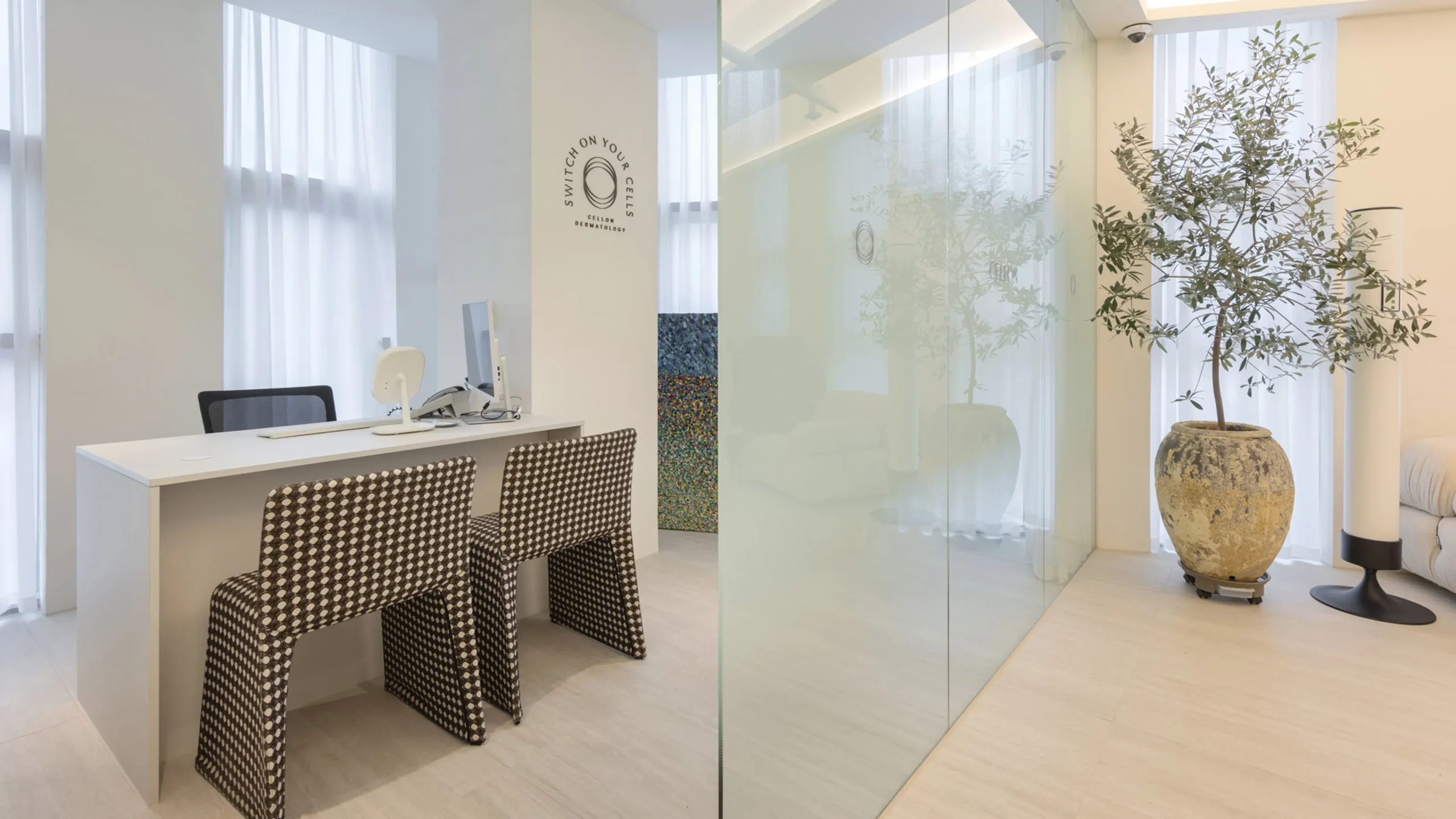
V. What is the environment like at the Cellon Dermatology clinic in Cheongdam? Let’s take a look through pictures and text.
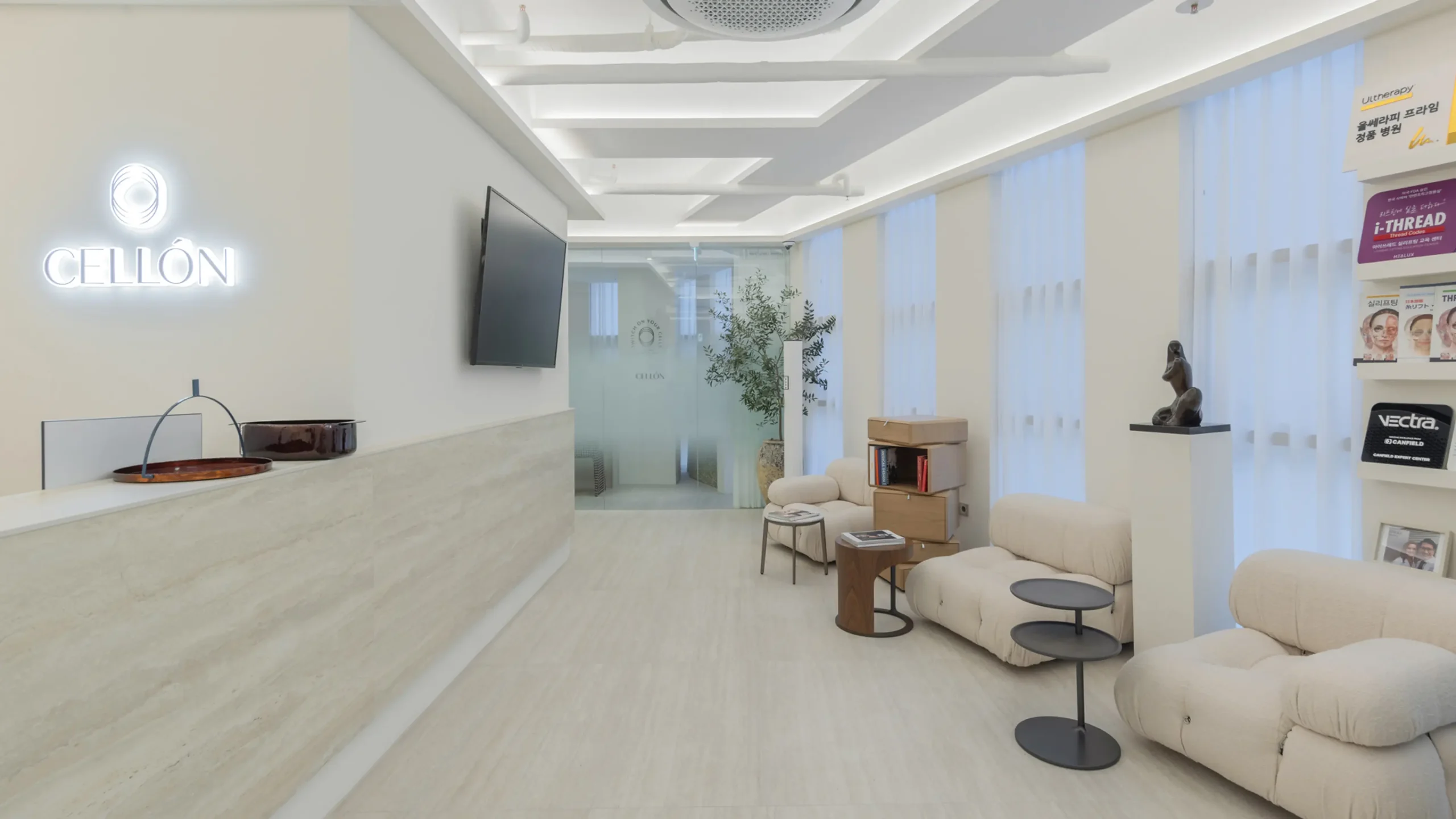
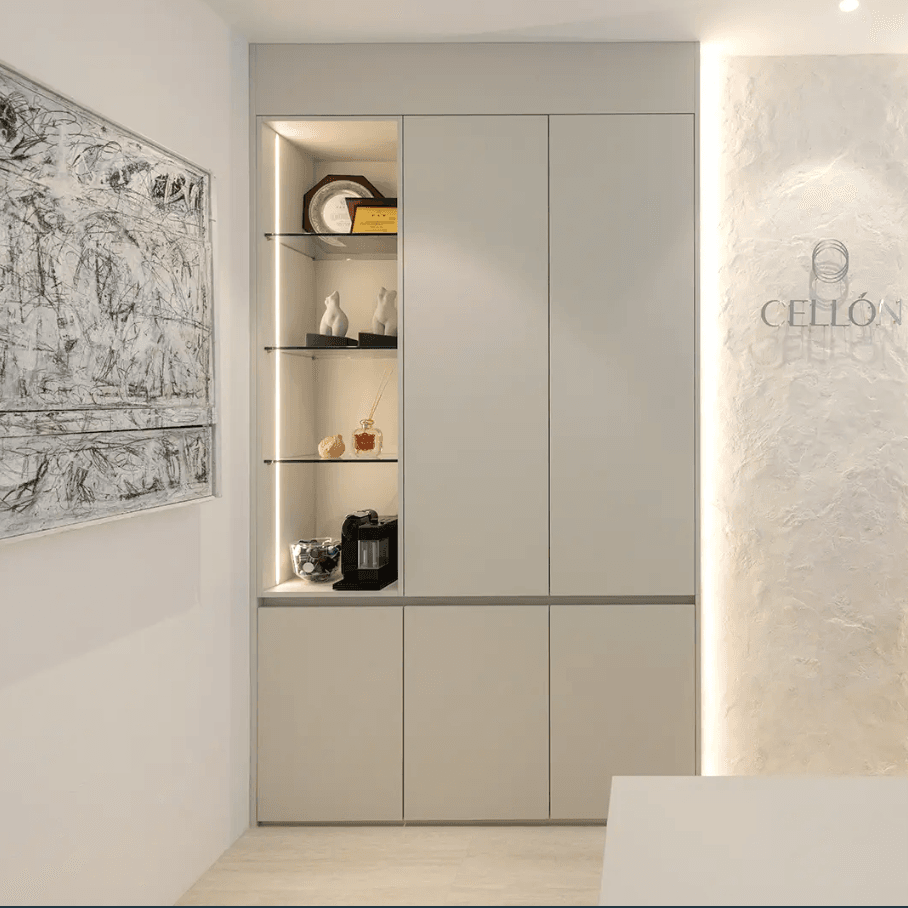
Let me state the conclusion first: the environment here is truly “Cheongdam-style”. It’s not the kind of opulent and dazzling atmosphere that makes you feel “this place is really upscale” the moment you enter; rather, it’s a more understated, clean, and comforting environment that makes you feel at ease.
The following are photos of the environment that I took on-site or that were provided officially:
- Lobby/Waiting Area: Upon entering, you will first come across the reception counter, followed by the waiting area. The sofas are a comfortable grayish hue with a matte finish, and the overall lighting is not too bright. Personally, I think waiting for 20 to 30 minutes in this environment wouldn’t be annoying at all.
- Consultation Room: All consultations with Director Jiang take place here. There is a screen on the table, allowing us to review pre-operative analyses and simulation results while discussing treatment plans. I particularly noticed that there were no “before-and-after comparison images” hanging on the wall – and I think this is a great feature. After all, everyone’s situation is different, and using standard templates could easily lead to unrealistic expectations.
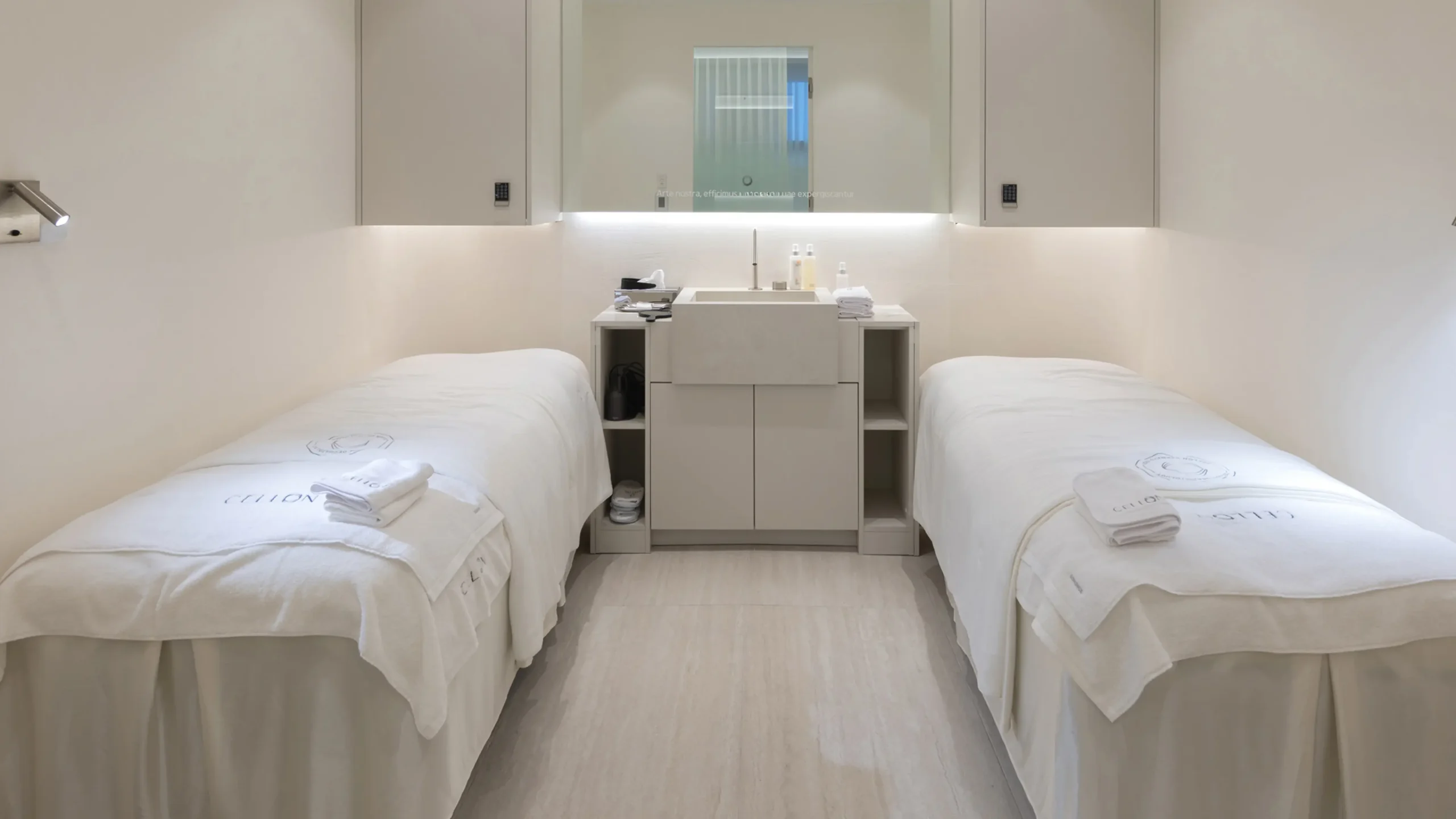
- Treatment Room: Due to concerns regarding medical privacy, I was unable to take any interior photos. However, according to the staff, the treatment room is designed in accordance with ISO 7 cleanroom standards, which is one of the key reasons why they are able to perform stem cell-related treatments.
- Overall style: There is no excessive decoration; the approach emphasizes a “medical professionalism” rather than a “luxury hotel” vibe. Personally, I really like this style because people come here for treatment, not to take photos or check in.
VI. FAQ on Common Issues at Cheongdam Cellon Dermatology
Q1: Is there a Chinese translation available for Cellon Dermatology? Will there be any communicatio
n issues? Currently, all consultations offer English services, and Chinese translations can be arranged in advance via phone or LINE. If it’s your first visit and you’re concerned about communication barriers, we recommend that you contact us via LINE (@901taiqf) or Gmail (diandianwang075@gmail.com) before coming to discuss your needs and concerns. This will ensure a smoother experience upon arrival.
Q2: Is Cellon a suitable choice for my first experience with medical aesthetics in South Kor
ea? If you are interested in “stem cell therapy” or “fundamental skin regeneration,” then Cellon is indeed an excellent option. However, if you simply want to try something like “heat radiofrequency treatment” or “hyaluronic acid injections” as a beginner, Cellon may not be the best choice – after all, Cellon’s strength lies in providing “long-term, fundamental solutions,” rather than quick-fix treatments that yield immediate results.
Q3: What are the differences between stem cell therapy and HIFU/Sonica? Simply put, HIFU and Son
ica work by “stimulating the regeneration of Collagen from the outside,” and their effects usually last for about 1 to 2 years. Stem cell therapy, on the other hand, “restores the skin’s self-healing ability at the cellular level,” resulting in longer-lasting effects. It’s not a matter of which method is “better” than the other, but rather that they are suitable for different types of problems. During my consultation, Director Jiang also sincerely advised me that if the issue is not deep-seated skin laxity, there is no need to rush into stem cell therapy.
Q4: When can I expect to see the results after treatment? Is multiple treatment sessions necessary? Accor
ding to the information provided by Cellon and data from academic studies, the effects of stem cell therapy usually begin to appear 4 to 8 weeks after treatment (since cell regeneration takes time and the results are not immediate), and these effects continue to improve for approximately 3 to 6 months. As for whether multiple treatment sessions are required, it depends on your initial condition and goals. Dr. Jiang will inform you during the first consultation about how many sessions are expected to be needed, without attempting to push you into additional treatments.
Q5: What are the opening hours of Cellon? Is it necessary to make a reservation in advance? Cellon is open f
rom 10:00 AM to 7:00 PM from Monday to Friday, and from 10:00 AM to 4:00 PM on Saturdays. It is closed on Sundays and public holidays. We highly recommend making a reservation in advance – since Dr. Jiang is not the type of doctor who sees multiple patients at the same time; each consultation session is reserved for a single patient only. If you arrive on the spot without a reservation, you may find that all slots have been booked.
Q6: What are the payment methods available? Can I use overseas credit cards to pay?
According to the staff, the clinic accepts cash, cards issued in South Korea, and certain overseas credit cards (it is recommended to check in advance whether your card is valid for use in South Korea). For some high-value treatments (such as stem cell therapy), you can also inquire about possible installment options.
Q7: Are there any particular precautions to take during postoperative care? T
hese will vary depending on the specific procedure you undergo. However, the general rules remain the same: avoid strenuous exercise within 24 to 48 hours after the surgery, stay away from hot environments such as saunas or hot baths, and make sure to protect your skin from the sun. Cellon will provide detailed care guidelines after the procedure, including an English version, so there’s no need to worry too much.
VII. Basic Information about Cheongdam Cellon Dermatology
| Project | For more details |
|---|---|
| 📍 Clinic Name | Cellon Dermatology |
| 📌 Address | 3F, No. 37, 152 Seoryeong-ro, Gangnam-gu, Seoul (90-19 Cheongdam-dong, Olive Building) |
| 🚇 Transportation | Exit 9/10 of Cheongdam Station on Line 7 of the subway, about 8 to 10 minutes on foot |
| 🕐 Business Hours | Monday to Friday: 10:00 AM ~ 7:00 PM / Saturday: 10:00 AM ~ 4:00 PM / Closed on Sundays and public holidays |
| 🚗 Parking | There are parking spaces available inside the building; it is recommended to check in advance before setting off. |
| 💬 How to Make an Appointment | Consult via LINE, send an email via Gmail, or make a reservation with just one click through BeautsGO. |
VIII. How to Make an Appointment at Cheongdam Cellon Dermatology – LINE, Gmail, or BeautsGO
Are you ready? Click the button below and book your appointment now.
IX. Recommended Reading – More Tips on Medical Aesthetics in South Korea
- 📝 Hongdae VELYB Dermatology Clinic Appointment Guide: Just 10 minutes from Seomyeon! Juvelook starts from 9.1 million won.
- 📝 How should people who are afraid of pain choose medical beauty treatments? South Korea’s THE LIFT Dermatology Center offers completely pain-free procedures at ONDA – ensuring the highest possible CP value.
- 📝 Setting off from Gangnam’s new Cheongdam area! My real experiences with South Korea’s Bioface dermatology clinic: After getting the treatment, my friends all asked if I had lost weight.
- 📝 Comprehensive Guide to South Korea’s Muse Dermatology Clinics: Gangnam Diolite – a 14-year-old premium brand with 2.6 million patients; price lists for Rejuran and Thermage + reservation services
- 📝 How to Make an Appointment at Kunshan VelyB Dermatology Clinic: Just 5 minutes away from Seomyeon Market! South Korea’s No.1 chain brand for comprehensive medical aesthetics treatments.